Disability, Inclusion and Resilience in the Veterinary Workforce
published on
11/10/2026
written by
Konstantinos Eleftheriadis
Konstantinos joined the World Organisation for Animal Health (WOAH) in 2025 as a Gender Technical Advisor. He holds a PhD in Social and Political Sciences and has extensive experience in gender equality, disability-related discrimination and social inclusion, both as an academic and as a consultant. He has published two books and several articles in academic journals and international media.
Aedín Mac Devitt
Aedín joined the World Organisation for Animal Health (WOAH) in 2022 and is Head of the Publications and Documentation Unit. She has more than 20 years of experience in the publishing sector and holds a BA in business and languages, an MA in translation studies and an MSc in mindfulness-based well-being. Aedín is a member of WOAH’s Disability and Health Equity group and enjoys facilitating dialogue on social priorities through publishing and writing.

Stéphane Renaudin
Stéphane joined the World Organisation for Animal Health (WOAH) in 2016 and is Head of the Institutional Affairs and Partnerships Department. He has more than 20 years of experience in diplomacy and international cooperation. Serving as part of the WOAH Sub-Regional Representation for South East Asia, he collaborated with regional colleagues to develop and launch the Comics Competition aimed at promoting gender equality, disability and social inclusion (GEDSI) in the veterinary sector

Maho Urabe
Maho is a veterinarian with a background in public health and serves as Regional Capacity Building Coordinator at the World Organisation for Animal Health (WOAH) Regional Representation for Asia and the Pacific. Since joining WOAH in 2017, she has supported initiatives in veterinary medicine, One Health, and gender equality, disability and social inclusion (GEDSI) by building and strengthening regional partnerships, facilitating collaboration and fostering knowledge-sharing networks.

Basilio Valdehuesa
Basilio joined the World Organisation for Animal Health (WOAH) in 2021 and serves as Regional Communication Officer for Asia and the Pacific at the WOAH Regional Representation for Asia and the Pacific. He previously worked at United Nations University, a research and think tank institution of the United Nations, and at New York University, where he developed an understanding of storytelling, visual design and gender equality, disability and social inclusion (GEDSI) principles. He has applied this knowledge to projects such as the Comics Competition and other initiatives aimed at raising awareness of GEDSI.
Abstract
Disability and chronic health conditions affect a significant proportion of the global workforce, yet barriers to employment and career progression remain widespread. In the veterinary sector, research suggests that workplace expectations, inaccessible environments, anticipated stigma and limited flexibility can create additional challenges for people with disabilities or chronic health conditions. Drawing on international research, studies of the veterinary sector and the World Organisation for Animal Health’s recent initiatives in gender equality, disability and social inclusion, this article examines how workplace barriers affect workforce resilience. It also explores the role of storytelling in promoting understanding and inclusion through the experience of a veterinary student whose award-winning comic depicts living and working with a disability. While policies, workplace adjustments and institutional frameworks are important, organisational culture is equally critical. Creating environments where individuals feel able to discuss their needs without fear of judgement can help organisations retain skilled professionals and build a more diverse, resilient and sustainable veterinary workforce.
According to the World Health Organization (WHO), around 1.3 billion people, or 16% of the global population, experience disability. This includes people with physical, sensory, intellectual or psychosocial impairments. Some disabilities are immediately apparent, while others are not, and chronic health conditions can fluctuate over time [1].
Although disability is often viewed primarily through a medical lens, WHO explains that disability ‘results from the interaction between individuals with a health condition, such as cerebral palsy, Down’s syndrome and depression, with personal and environmental factors including negative attitudes, inaccessible transportation and public buildings, and limited social support’ [1]. Disability therefore cannot be understood solely as an individual medical condition. The social model of disability emphasises the role of environmental, institutional and attitudinal barriers in restricting participation [2]. For example, a wheelchair user may be prevented from accessing public transport not because of their impairment itself, but because the infrastructure is inaccessible.
These barriers can also have a significant impact on employment opportunities. A 2019 study by the Organisation for Economic Co-operation and Development (OECD) found that the employment rate of people with disabilities across 32 OECD countries was 27 percentage points lower than that of people without disabilities. People with disabilities were also 2.3 times more likely to be unemployed [3].
Although chronic health conditions do not necessarily lead to disability, research on these conditions offers further insights into how workplace barriers operate. A 2024 review identified work–health conflict, anticipated stigma and job insecurity as recurring concerns. It also highlighted supportive supervision, organisational fairness and ‘health-related leeway’ – the flexibility to adjust work in response to day-to-day changes in symptoms – as factors that can help people remain in employment [4].
A survey of 10,000 employed people across 20 countries by the multinational corporation Deloitte provides a broader international perspective. Respondents noted that they either had a disability, identified as neurodivergent, lived with chronic health conditions or reported difficulty undertaking certain activities. Among those who had requested workplace accommodations, 74% reported that at least one request had been rejected. Six in ten respondents reported that accessibility issues had prevented them from attending at least one type of work event [5].
However, evidence specific to the veterinary sector is more limited. One of the largest recent studies was conducted in the United Kingdom by the Royal College of Veterinary Surgeons, British Veterinary Chronic Illness Support and the Institute for Employment Studies. The voluntary survey received 3,411 responses from veterinary professionals and students. More than two-thirds of respondents (68.5%) reported having disclosed their disability or chronic condition to their current employer, while 68.4% agreed or strongly agreed that they had to make significant changes to their lives to continue working [6].
Because participation in the survey was voluntary, its findings cannot be considered representative of the veterinary profession as a whole. Nevertheless, the study provides valuable insights into workplace experiences. Some respondents described supportive colleagues and understanding from managers, as well as being able to discuss and agree on workplace adjustments. Others reported delays in receiving support, a lack of understanding from others or assumptions about the work they could undertake. Greater flexibility in working hours, duties and roles, together with timely adjustments to the working environment, were among the measures respondents believed could help them remain in employment [6].
Together, these findings suggest that workforce resilience depends not only on the capacity of individual professionals to adapt to demanding working conditions, but also on the capacity of veterinary organisations to adapt working environments to different needs and circumstances.
The difficulty is not necessarily a lack of capability, but rather working in environments that may not always recognise or accommodate different needs.
Promoting Inclusion Through Storytelling
The above findings highlight the importance of recognising the barriers that people with disabilities may encounter in veterinary workplaces. Storytelling offers one way of raising awareness by communicating experiences that may be difficult to capture through data alone.
As part of its efforts to strengthen Veterinary Services and support veterinary workforce development, the World Organisation for Animal Health (WOAH) has explored the impact of disability and chronic illness through its work on gender equality, disability and social inclusion (GEDSI) in the veterinary sector. Studies conducted in Asia and the Pacific identified barriers related to gender stereotypes and disability, as well as social background, caring responsibilities, travel and expectations of constant availability [7].
As part of this work, WOAH collaborated with the Federation of Asian Veterinary Associations, the Asian Association of Veterinary Schools and the International Veterinary Students’ Association Asia and Pacific to organise a comics competition in 2026, inviting veterinary students and professionals to illustrate what a more inclusive profession might look like [8]. Comics can highlight experiences that may be overlooked in surveys or policy documents. By combining narrative and images, they can bring to life the day-to-day challenges of living with a disability or chronic illness, moving beyond statistics and stereotypes.
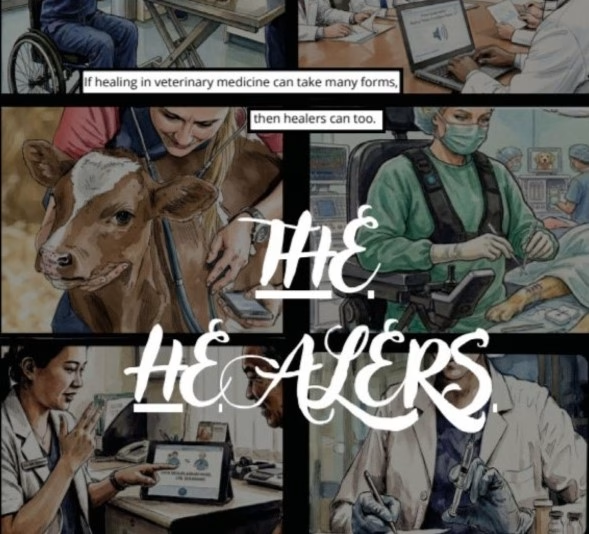
One of the runners-up was Virginia Ayu Kinanti, a veterinary student whose comic explores the challenges of carrying out veterinary work after developing a disability. It tells the story of a wildlife veterinarian injured in the field who must navigate life and work as a wheelchair user and rediscover his identity. ‘Veterinary work often requires long hours, rapid decision-making and the ability to manage stressful situations while caring for animals and communicating with owners,’ she explains. ‘For someone living with a chronic condition or disability, these demands may create additional challenges that are not always visible to others.’
However, Virginia emphasises that experiences of disability or chronic illness vary and that the surrounding environment can make a considerable difference to a person’s well-being. ‘The difficulty is not necessarily a lack of capability, but rather working in environments that may not always recognise or accommodate different needs,’ she says. ‘With understanding and appropriate support, animal health professionals with chronic conditions or disabilities can continue to contribute meaningfully to the profession.’
While storytelling cannot replace institutional policies or workplace accommodations, it can help organisations recognise barriers that may otherwise remain overlooked and encourage dialogue about the changes needed to address them.
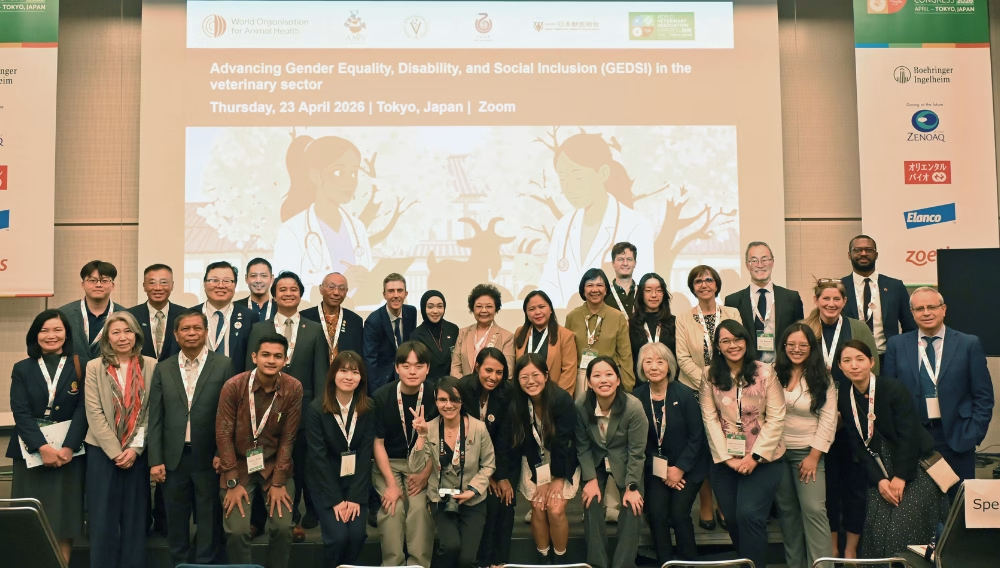
Participants at the GEDSI session at the World Veterinary Association Congress 2026 ©Unknown
Creating More Inclusive Organisations
Beyond awareness-raising, disability inclusion requires institutional commitments that translate recognition into concrete policies and practices. International organisations and national authorities are increasingly developing frameworks that incorporate disability inclusion into wider institutional reform. In June 2025, WHO launched its Disability and Health Equity Network, which focuses on four strategic areas: leadership among persons with disabilities, political prioritisation of disability health equity, disability-inclusive health systems and stronger evidence and monitoring [9].
The Network brings together intergovernmental organisations, governments, organisations of persons with disabilities, academic institutions and other stakeholders. Its activities include supporting the participation of persons with disabilities in health-sector decision-making, promoting disability training in health-professional education, improving the accessibility of digital technologies and strengthening disability data [10]. WOAH’s membership in the Network creates an opportunity to consider how this work can inform approaches to inclusion in the animal health workforce.
National guidance in this area is also emerging. A French government guide published in March 2026 sets out 80 practices for neuroinclusive employment, covering organisational readiness, recruitment, onboarding, management and career development [11]. It encourages employers to review aspects of their working practices, including job descriptions, interview formats, communication, sensory environments and performance assessment.
In veterinary workplaces, appropriate adjustments will depend on individual needs, job requirements and available resources. Possible measures include changes to working hours or duties, accessible equipment and premises, clearer communication and time off to attend medical appointments. The UK veterinary study found that even relatively straightforward changes, such as providing seating or different lighting, could be valuable when implemented promptly [6].
However, practical adjustments alone may not be sufficient. For Virginia, workplace culture is equally important. ‘Veterinary professionals are often expected to be resilient and capable under pressure, which can make it difficult for individuals to ask for support when they need it,’ she says. ‘One of the most important changes is creating a culture where people feel comfortable discussing their challenges without fear of being judged or seen as less competent.’
Her comments reflect a concern identified in the wider literature: even when support is formally available, workers may be reluctant to request it because of anticipated stigma or uncertainty about how colleagues will respond [4].
This concern about recognition and understanding also motivated Virginia to enter WOAH’s comics competition. ‘Many challenges related to chronic illness, disability or mental well-being are not immediately visible, and people may not fully understand them unless they hear personal stories,’ she says. Her comments highlight the challenges associated with ‘invisible’ or non-apparent disabilities – those that may not be immediately apparent to others. In France, for example, an estimated four out of five disabilities are invisible; these include neurodivergence, such as autism or attention deficit hyperactivity disorder; mental health conditions; chronic illnesses such as multiple sclerosis, epilepsy or diabetes; chronic pain and fatigue; hearing impairments; and some visual impairments [12]. People with non-apparent disabilities may face additional challenges in having their needs recognised and appropriately accommodated.
From Awareness to Action
For Virginia, visual storytelling can help people understand experiences that might otherwise go unrecognised. ‘A reader may forget a statistic, but they often remember a story and the feelings it creates. Through visual storytelling, we can encourage empathy, challenge stigma and help people recognise experiences that might otherwise remain unseen.’
Her comic contributes to a wider conversation about disability and inclusion among veterinary associations, educational institutions and international organisations. It also raises practical questions for the profession: whether people feel able to discuss changing health needs, whether support is available early enough to make a difference and whether animal health careers can accommodate a wider range of people and ways of working.
The next challenge for the veterinary sector is to translate growing awareness into concrete institutional action. This can happen through accessible education and workplaces, flexible working arrangements, supportive leadership and opportunities for professionals with disabilities to participate in decisions that affect them. Building a resilient veterinary workforce requires not only recognising individual differences but also adapting organisations so that all professionals can contribute fully throughout their careers.
Main image: ©Virginia Ayu Kinanti, The Healers
References
[1] World Health Organization (WHO). Global report on health equity for persons with disabilities: executive summary. Geneva (Switzerland): WHO; 2022. Available at: https://iris.who.int/server/api/core/bitstreams/da56b5be-1f6a-41db-94a0-f8e97c8dd97d/content (accessed on 28 August 2026).
[2] Disability Rights UK. Social model of disability: language. London (United Kingdom): Disability Rights UK; no date. Available at: https://www.disabilityrightsuk.org/social-model-disability-language (accessed on 1 October 2026).
[3] Organisation for Economic Co-operation and Development (OECD). Disability, work and inclusion: mainstreaming in all policies and practices. Paris (France): OECD Publishing; 2022. https://doi.org/10.1787/1eaa5e9c-en
[4] McGonagle AK, Chosewood LC, Hartley TA, Newman LS, Ray T, Rosemberg M-A. Chronic health conditions in the workplace: work stressors and supportive supervision, work design and programmes. Occup. Health Sci. 2024;8(2):233-41. https://doi.org/10.1007/s41542-024-00192-0
[5] Deloitte. Disability inclusion @ work 2024: a global outlook. London (United Kingdom): Deloitte Touche Tohmatsu Limited; 2024. Available at: https://www.deloitte.com/global/en/issues/work/content/disability-inclusion-at-work.html (accessed on 28 August 2026).
[6] Plowden Roberts C, Robinson D, Rosolin B. Disability and chronic illness in veterinary work and education: a survey exploring experiences of disability, chronic illness, mental health and neurodiversity in the veterinary sector. Brighton (United Kingdom): Institute for Employment Studies; 2024. Available at: https://www.employment-studies.co.uk/wp-content/uploads/2024/10/Disability-and-Chronic-Illness-full-report-final.pdf (accessed on 28 August 2026).
[7] World Organisation for Animal Health (WOAH). Gender assessment of veterinary services in South-East Asia. Tokyo (Japan): WOAH Regional Representation for Asia and the Pacific; 2023. Available at: https://rr-asia.woah.org/en/news/gender-assessment-of-veterinary-services-in-south-east-asia/ (accessed on 28 August 2026).
[8] World Organisation for Animal Health (WOAH). Advancing gender equality, disability, and social inclusion (GEDSI) in the veterinary sector. Tokyo (Japan): WOAH Regional Representation for Asia and the Pacific; 2026. Available at: https://rr-asia.woah.org/en/events/advancing-gender-equality-disability-and-social-inclusion-gedsi-in-the-veterinary-sector/ (accessed on 28 August 2026).
[9] World Health Organization (WHO). WHO disability health equity initiative. Geneva (Switzerland): WHO; 2025. Available at: https://www.who.int/initiatives/disability-health-equity-initiative (accessed on 28 August 2026).
[10] World Health Organization (WHO). Workstreams of the WHO disability health equity network. Geneva (Switzerland): WHO; 2025. Available at: https://cdn.who.int/media/docs/default-source/disability/workstreams_who-disability-health-equity-network.pdf (accessed on 28 August 2026).
[11] Délégation interministérielle à la stratégie nationale pour les troubles du neurodéveloppement. La neurodiversité en entreprise : repenser, recruter, déployer, développer. Paris (France): Gouvernement français; 2026. Available at: https://handicap.gouv.fr/sites/handicap/files/2026-03/Guide-la-neurodiversite-en-entreprise.pdf (accessed on 28 August 2026).
[12] Portail Handicap. Chiffres clés du handicap en France : données et statistiques 2025. Paris (France): Portail Handicap; 2025. Available at: https://portail-handicap.fr/actualites-ressources/chiffres-cles-handicap-france (accessed on 11 September 2026).
Continue reading

Receive the latest updates from our Organisation, network, and partners.
This includes Members’ self-declarations, news articles, scientific insights, publications, and more.