Strengthening India’s Veterinary Workforce through National Standards
published on
10/19/2026
written by

Satender Singh Arya
Satender is a veterinary and management professional with over 35 years of experience in veterinary services, livestock development, institutional strengthening and workforce education. His career spans government, co-operatives, multinational corporations and the not-for-profit sector, giving him a deep understanding of the technical, institutional and policy dimensions of strengthening Veterinary Services and the value of collaboration across stakeholders. For the past 13 years, he has served as CEO of the Agriculture Skill Council of India (ASCI), leading national efforts in competency-based skilling across agriculture and allied sectors. Under his leadership, ASCI has developed 186 occupational standards, built a framework of more than 8,500 trainers and 1,500 assessors, partnered with over 600 industry organisations and 950 institutions, and certified 1.5 million candidates, including 31,000 Community Animal Health Workers (CAHWs). These initiatives have significantly strengthened workforce capability, institutional performance and vocational education delivery across agriculture and allied sectors.
Abstract
India’s livestock sector plays an important role in rural livelihoods, strengthening the national economy and food security as it contributes 30.87% to the nation’s agricultural Gross Value Added. Although India is a global leader in milk, meat and egg production, its productivity is constrained by disease, uneven skill levels and climate challenges. To address these challenges, India has adopted the National Skill Qualification Framework (NSQF) and developed National Occupational Standards (NOS) through the Agriculture Skill Council of India (ASCI), creating a structured approach to workforce training and certification. More than 280,000 candidates have been trained for livestock-related job roles, including para-veterinary workers, in line with World Organisation for Animal Health (WOAH) guidelines. In 2024, the Livestock Service Provider (LSP) Qualification Pack (QP) was revised to incorporate competencies in preventive care, disease control, first aid and veterinary extension, promoting consistent curricula and international credibility. Evidence shows that skills development can increase incomes and yields, and improve service quality, while integrating One Health principles. India’s experience demonstrates how national occupational standards can help professionalise paraprofessionals, strengthen animal welfare and build more climate-resilient, welfare-oriented livestock systems, providing a practical model for veterinary workforce development.
The livestock sector contributes 30.87% to India’s agricultural Gross Value Added [1], playing a pivotal role in rural livelihoods and the national economy. Beyond its economic contribution, the sector is integral to food security and nutritional resilience, supporting millions of households across the country. India is one of the world’s leading producers of milk, meat, eggs and fish, with growth driven by demand for protein, exports and value-added products. However, productivity remains constrained by disease, uneven skill levels and climate-related challenges. Advances in technology and skilled veterinary services will therefore be essential to sustaining the sector’s growth.
India’s Framework for Developing Workforce Skills
Agriculture and allied sectors, including livestock (dairy, poultry and small ruminants), fisheries, horticulture and forestry, employ approximately 43% of India’s workforce [2]. Developing a skilled and productive workforce is therefore critical to livelihoods and the rural economy. The livestock sector contributes to income generation, women’s participation and agricultural productivity, yet significant skills gaps remain. National assessments indicate that only a small proportion of the workforce has received formal vocational training, with particularly limited coverage in agriculture. Many agricultural households, especially smallholders, also have inadequate access to technical advice and extension services (e.g. guidance on feeding and nutrition, housing, biosecurity, farm management, preventive care, schemes awareness) for livestock production.
India has sought to address these gaps through a national system that connects education and training more closely with the skills required in the workplace. Introduced in 2013, the National Skills Qualifications Framework (NSQF) is a competency-based framework that organises qualifications according to defined learning outcomes and enables progression between formal education, vocational training and skills development. In 2023, it was updated in line with the aspirations of the National Education Policy (NEP) 2020 to further strengthen mobility between academic and vocational learning pathways.
At the heart of this system are the National Occupational Standards (NOS), which define the performance standards, knowledge and skills required for specific job roles or workplace functions. Developed through an industry-led process, they are designed to ensure that training and assessment reflect current sectoral needs and occupational practices. Related NOS are grouped into Qualification Packs (QPs), which provide the basis for competency-based training, assessment and certification under the NSQF. Each QP specifies the occupational standards, learning outcomes and NSQF level associated with a particular job role.
Under the NSQF, qualifications are assigned Levels 1 to 8, reflecting increasing complexity in the knowledge, professional skills, aptitudes and responsibilities expected of learners or workers. Higher levels indicate greater theoretical understanding, technical competence, decision-making ability and autonomy in professional practice. The Agriculture Skill Council of India (ASCI), one of India’s sector skill councils, applies this framework to agriculture and allied sectors, including livestock, by developing occupational standards and QPs, and supporting standardised curricula, assessment and certification.
How ASCI is Building Workforce Skills
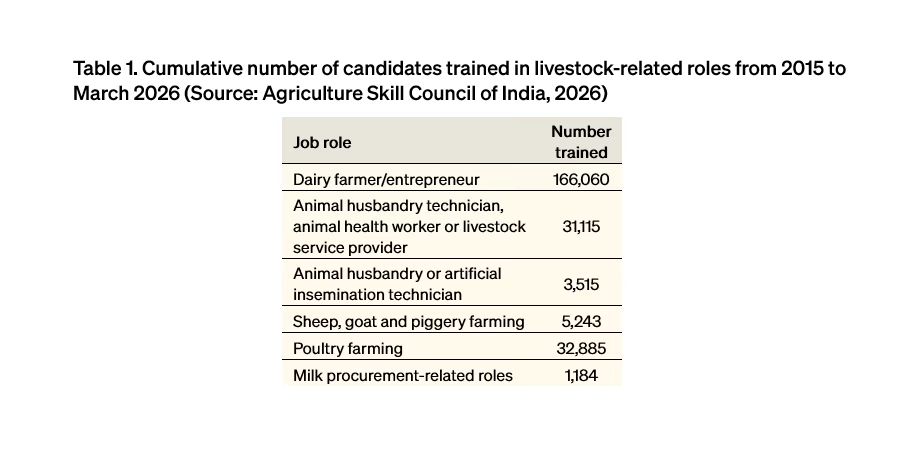
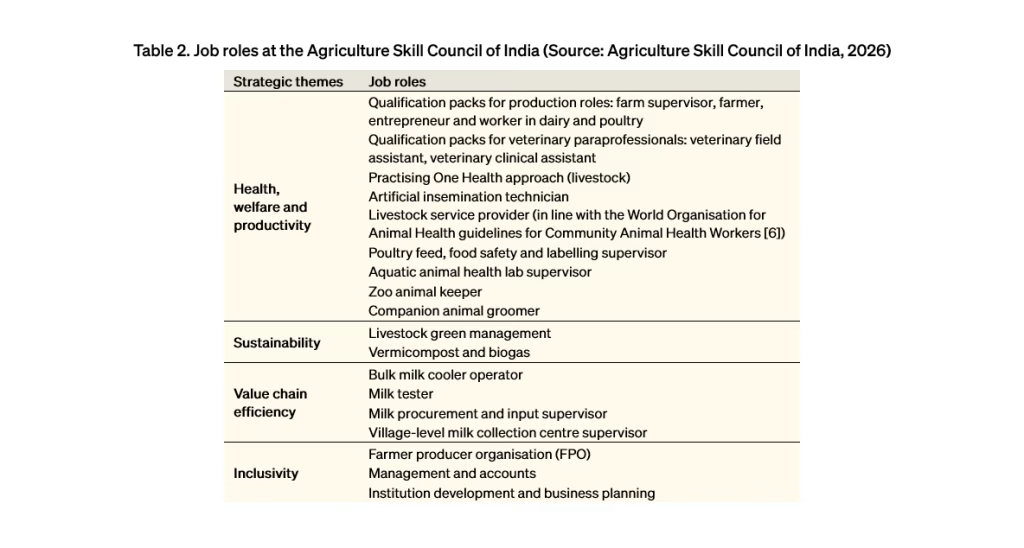
As an awarding body under the NSQF, ASCI sets qualification standards and certifies skills in agriculture and allied sectors. It brings together industry, academia and government, and supports skills development, inclusion and entrepreneurship through more than 800 training centres and 1,000 certified assessors. ASCI has developed more than 160 QPs covering areas such as production, machinery, markets, post-harvest management and technology. More than 280,000 candidates have been trained in livestock and animal husbandry roles (see Table 1), with relevant QPs spanning livestock production and animal health (see Table 2). Across 27 states and Union Territories, ASCI also aligns school and college curricula with 25 of its QPs under the National Education Policy.
ASCI’s work extends to emerging skills and challenges. Through the Indo-Australian collaborative project ‘Development of Critical Agriculture Skill Courses in India’ [5], experts from Australia and India have worked together to identify job roles and develop curricula and content. The project has developed courses including Digital Agriculture Extension Promoter and Carbon Farming Practitioner, alongside 20 NOS and micro-credentials focused on renewable energy, greenhouse gas emissions and One Health. These courses and credentials are open to all eligible candidates in India.
The QPs listed in Table 2 incorporate animal welfare (preventive care, disease control and humane handling), biosecurity (vaccination, hygiene and safe production systems), workplace safety (safe animal handling, disaster management and occupational health) and sustainability (climate-resilient practices, renewable energy and waste-to-value systems) as cross-cutting standards. Together, these standards help professionalise the workforce by ensuring that farmers, paraprofessionals and other workers are trained not only in technical skills but also in responsible, welfare-oriented and safety-conscious practices.
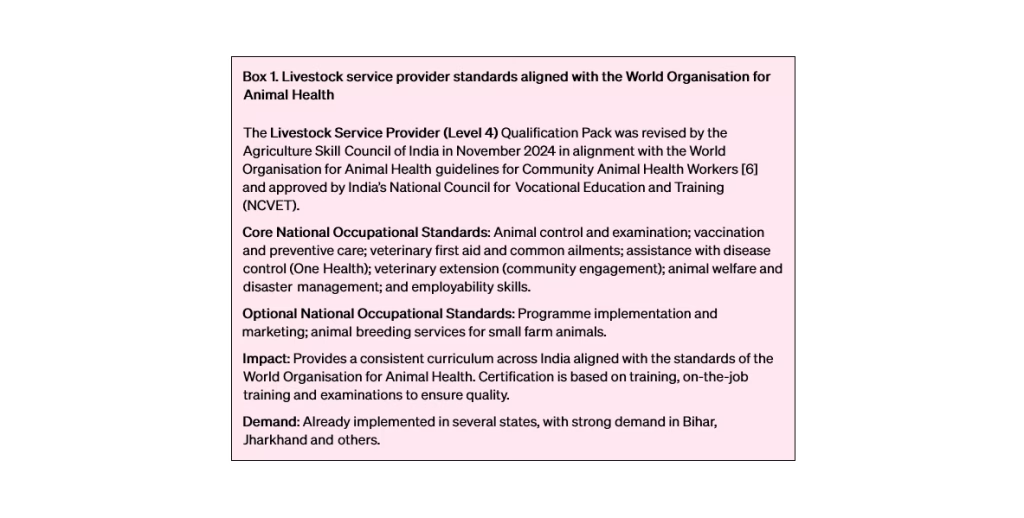
ASCI develops QPs using evidence and input from researchers, academia and the industry, and revises them every three years. One notable revision is the Livestock Service Provider (LSP) QP, which was updated in November 2024 (see Box 1) to incorporate the World Organisation for Animal Health (WOAH) guidelines for Community Animal Health Workers (CAHWs) [6]. The revised QP on the role of LSP/CAHW covers preventive animal healthcare, disease control, first aid, veterinary extension, disaster management and public health services.
The Impact of NSQF/NOS Skills Development
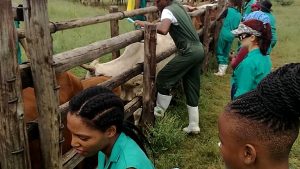
Training livestock farmers through ASCI job roles has led to higher incomes, better yields and improved management practices. In a survey of 50 trained farmers, self-employed participants reported income increases of 25–35%, and most trainees recommended ASCI skill programmes due to their benefits. Before training, participants had limited knowledge of animal care and disease prevention; afterwards, 75–85% understood advanced topics and more than 90% were familiar with vaccination schedules [3].
As the livestock sector adopts new technologies, a skilled workforce is becoming increasingly important, making continued training crucial. Certification and professional recognition for paraprofessionals have helped improve the quality of services, while rural communities have benefited from more timely preventive care and disease control. Alignment with One Health principles has also helped integrate animal, public and environmental health considerations [7,8].
Skills training can also provide pathways into further education. Certified candidates can earn academic credit through the Government of India’s Academic Bank of Credits (ABC) scheme [4]. Under NEP, these credits can be transferred between vocational and formal education. For example, a learner completing a Skill India course in Dairy Farm Management can have the resulting credits stored in their ABC account. If they later enrol in a bachelor’s programme in dairy science or another agriculture-related graduate programme, the credits can be transferred, formally recognising their vocational training and thereby reducing the coursework required.
Training livestock farmers has led to higher incomes, better yields and improved management practices.
Future Outlook: Turning Skills into Sustainable Progress
India’s livestock sector is increasingly focused on sustainable, welfare-oriented growth through workforce development, technological innovation and alignment with global standards. Key priorities include promoting healthier herds and safer food production through science-based animal health and husbandry practices, while strengthening service delivery by professionalising frontline animal health workers through competency-based training and NOS certification. Digital transformation is also creating new opportunities through tele-veterinary services, electronic record systems and emerging technologies such as drone-based monitoring. At the same time, efforts to strengthen climate resilience and transition towards lower-emission livestock systems are contributing to broader net-zero ambitions. Greater alignment with international standards and best practices can further enhance the quality, credibility and global recognition of India’s livestock sector.
India’s NSQF–NOS initiative demonstrates how structured standards can address workforce gaps and support sustainable livestock production and animal health. By formalising the acquisition and recognition of competencies among frontline animal health workers, the initiative has helped improve service quality and build resilience across the animal production and health sector.
However, challenges remain. Training coverage is still limited, while access and affordability can restrict participation, particularly among smallholders. There is also scope to improve the legal and working environment for frontline animal health workers. Finally, although cross-cutting standards such as animal welfare, biosecurity, workplace safety and sustainability are embedded in curricula, their implementation across regions remains inconsistent. Addressing these challenges will be essential if the benefits of India’s skills framework are to reach more workers and communities.
Main image: ©Rawpixel, Getty Images
References
[1] Department of Animal Husbandry and Dairying, Ministry of Fisheries, Animal Husbandry and Dairying, Government of India. Annual Report 2025-26. New Delhi (India): Department of Animal Husbandry and Dairying, Ministry of Fisheries, Animal Husbandry and Dairying, Government of India; 2026. Available at: https://dahd.gov.in/sites/default/files/2026-04/AnnualReport2025-26.pdf (accessed on 7 August 2026).
[2] National Statistics Office, Ministry of Statistics and Programme Implementation, Government of India. Annual Report, Periodic Labour Force Survey (PLFS) 2024-25. New Delhi (India): Ministry of Statistics and Programme Implementation, Government of India; 2025. Available at: https://www.mospi.gov.in/sites/default/files/publication_reports/PLFS_Changes-in-2025_rev.pdf (accessed on 7 August 2026).
[3] Agriculture Skill Council of India. Skill Gap Analysis in Indian Dairy Sector. Gurugram (India): Agriculture Skill Council of India; 2024. Available at: https://asci-india.com/img/environmental-scan-&-skill-gap/Skill%20Gap%20Analysis%20in%20Indian-Dairy%20Sector-Draft.pdf (accessed on 7 August 2026).
[4] Gohain MP. New framework offers credit accumulation from Class 5 to PhD level. Times of India. 2023 Apr 11. Available at: https://timesofindia.indiatimes.com/education/news/new-framework-offers-credit-accumulation-from-class-5-to-phd-level/articleshow/99414258.cms (accessed on 7 August 2026).
[5] The University of Adelaide, Agriculture Skill Council of India (ASCI). Developing critical agricultural skills in India: scoping study report. Adelaide (Australia): The University of Adelaide; 2022. Available at: https://asci-india.com/img/environmental-scan-&-skill-gap/DCASCI%20Report.pdf (accessed on 7 September 2026).
[6] World Organisation for Animal Health (WOAH). Competency and curriculum guidelines for Community Animal Health Workers. Paris (France): WOAH; 2024. https://doi.org/10.20506/woah.3535
[7] Kumar V, Meena HR, Singh J, Kar P. Enhancing livestock health services in India: an analytical study of para-veterinary workforce and service delivery. Indian J. Anim. Sci. 2025;95(12):1115–1122. https://doi.org/10.56093/ijans.v95i12.172339
[8] Kumar V, Meena HR, Kadian KS, Sankhala G, Mohanty TK, Lathwal SS, et al. Performance, proficiency, and training need of para-vets in the four states of India. Indian J. Anim. Sci. 2021;91(12):1089–1102. https://doi.org/10.56093/ijans.v91i12.119834
Continue reading



Receive the latest updates from our Organisation, network, and partners.
This includes Members’ self-declarations, news articles, scientific insights, publications, and more.