Five ways animal health connects climate change and sustainable food systems
published on
06/12/2026
written by

Berenice Rocío Taboada Díaz
Berenice is a Communications Officer at WOAH in Brussels, where she works on communication strategies for the European region. With a background in journalism, international relations and visual arts, she has experience across Latin America, Africa, Europe and Asia. Her work focuses on translating complex topics—such as animal health, climate change and sustainability—into accessible and engaging narratives for diverse audiences.
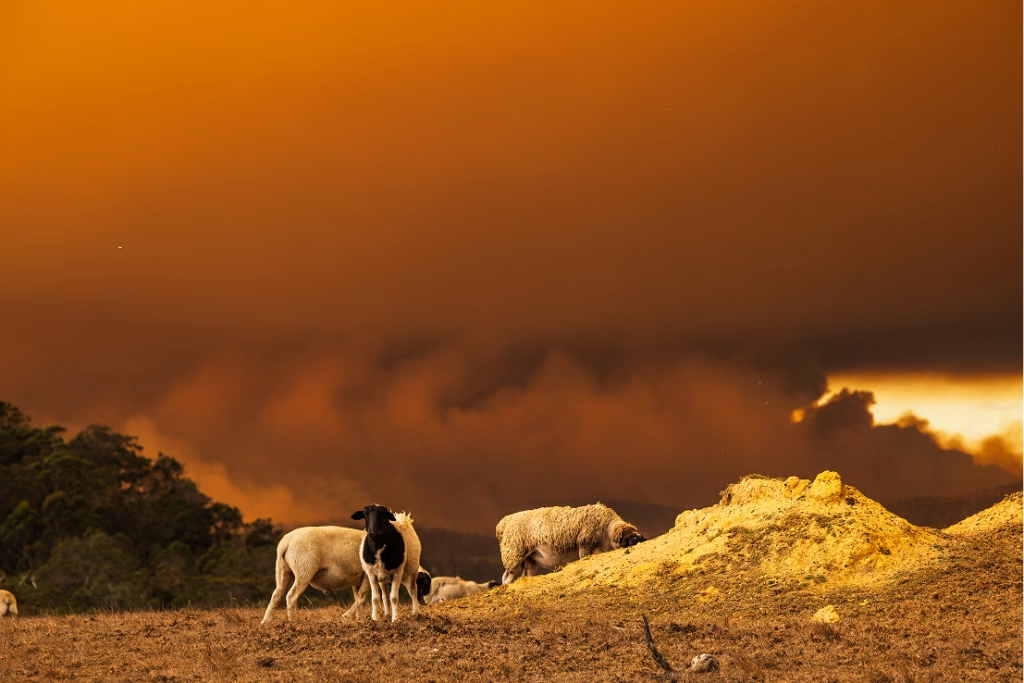
When we talk about climate change, we tend to picture the usual scenes: shrinking ice caps, scorched forests, or fields cracked by drought. But there’s another story unfolding quietly in the background—one that affects every ecosystem, every food system, and ultimately, every one of us. Climate change is reshaping the health of animals in profound ways. Diseases are moving into places they’ve never been before, heat stress is pushing livestock to their limits, and wildlife is increasingly exposed to new health threats as ecosystems shift—illustrated by the recent spread of avian influenza into previously unaffected regions, including Antarctica.
But here’s the twist: animal health isn’t just another casualty of the climate crisis. It’s a powerful line of defense. Strong veterinary systems—supported by a well-resourced veterinary workforce—can detect emerging threats early, protect food supplies, and help communities adapt to a world where climate extremes are becoming the norm. As the world moves toward 2030, integrating animal health into climate strategies is no longer optional. It is a strategic investment in sustainable, climate‑resilient food systems.
1. Climate change is increasingly threatening animal health
Climate change is accelerating the spread and intensity of animal diseases. Warmer temperatures and altered precipitation patterns are expanding the geographic range of vectors such as mosquitoes, ticks and sandflies. In Europe alone, nearly 700 outbreaks of vector-borne diseases were recorded in a single year as pathogens like West Nile fever, bluetongue and leishmaniosis moved into new ecological niches. Heat stress further weakens immunity, reduces productivity and increases susceptibility to both endemic and emerging diseases. These combined pressures create a multiplier effect: climate change amplifies biological risks faster than current surveillance systems can track them.
2. Healthy animals mean more efficient and resilient food systems
Livestock contribute roughly 14.5% of global greenhouse gas emissions, but improving animal health is one of the most effective ways to reduce emissions intensity. Sick or stressed animals require more feed, water and energy to produce the same amount of meat, milk or eggs. Mortality, reduced fertility and disease‑related production losses translate into “unproductive emissions”—greenhouse gases released without generating food. By reducing disease burdens, improving welfare and strengthening preventive care, countries can lower emissions per unit of product while using fewer natural resources. Investing in animal welfare and health is a direct form of climate action, because healthier animals convert feed more efficiently, require fewer inputs and generate fewer “unproductive” emissions linked to mortality and disease. Animal health is therefore both a mitigation and adaptation strategy, improving efficiency while helping producers cope with climate variability.
3. Veterinary services are a critical but often overlooked climate tool
Veterinary Services form the backbone of early detection and rapid response to climate‑sensitive diseases. Their role extends far beyond clinical care: they manage surveillance systems, enforce biosecurity, coordinate emergency response and protect food supply chains during climate shocks. In countries like Bangladesh, mobile veterinary teams have become indispensable after floods and cyclones, preventing disease spillover and stabilizing livestock‑dependent livelihoods. As climate extremes intensify, resilient veterinary systems reduce vulnerability, protect rural economies and strengthen national preparedness for biological threats.
4. Different production systems face different climate and health challenges
Climate policy must recognise that animal production systems are highly diverse and require context-specific governance approaches.
- Pastoral systems face “climate-driven displacement,” where droughts force unplanned migrations that break national traceability and increase transboundary disease risks.
- Intensive systems are increasingly challenged by heat stress, which weakens vaccine response and animal behavior.
- Aquatic systems are under threat from warming waters that trigger harmful algal blooms and reduce oxygen levels, leading to massive fish die-offs and increased disease incidence.Recognising these differences is essential for designing effective climate responses. Across all systems, strong animal health governance improves efficiency, reduces risk and supports long‑term resilience.
5. Integrating animal health into climate policy
Despite its importance, animal health is frequently missing from international climate negotiations and national climate commitments. To build truly resilient food systems, countries need to integrate animal health data into climate‑risk modeling, adaptation planning and early‑warning systems. This includes strengthening disease surveillance—potentially through AI‑assisted reporting—improving data quality for greenhouse gas inventories and ensuring equitable access to veterinary services for small‑scale producers, including women in underserved areas. A shift from reactive to predictive care, grounded in a One Health approach, is essential to manage the interconnected risks of climate change, food insecurity and emerging zoonoses.
Integrating animal health into climate and sustainability agendas is fundamental to the future of global food security. By addressing shifting disease dynamics, improving production efficiency and reinforcing veterinary governance, countries can build food systems that are both resilient and environmentally responsible. As climate pressures intensify, recognising animal health as a strategic pillar of climate action is essential to protect diverse production systems and safeguard rural livelihoods. A robust veterinary infrastructure is not only a health priority—it is a cornerstone of sustainable development in a warming world.
The Animal Echo aims to promote individual and collective understanding of animal health and welfare. We bring you insights and opinions from experts across the world. The opinions expressed in The Animal Echo are those of the author (s) and may not necessarily reflect WOAH’s official position.
Continue reading







Receive the latest updates from our Organisation, network, and partners.
This includes Members’ self-declarations, news articles, scientific insights, publications, and more.