Why we do what we do: A global health expert and a scientist reflect on global health security
published on
03/23/2026
written by

Interviewee: Dr. Kirk Douglas
Dr. Kirk Douglas is the Director of the Centre for Biosecurity Studies at the University of the West Indies.
He is a globally renowned scientist specialising in virology, zoonoses, biosecurity, and climate change.
Interviewee: Emma Ross
Emma Ross is Director of the Global Health Programme at Chatham House. She has moderated expert dialogues on a broad range of issues, from strengthening global biosecurity to the politics and geopolitics of outbreaks.
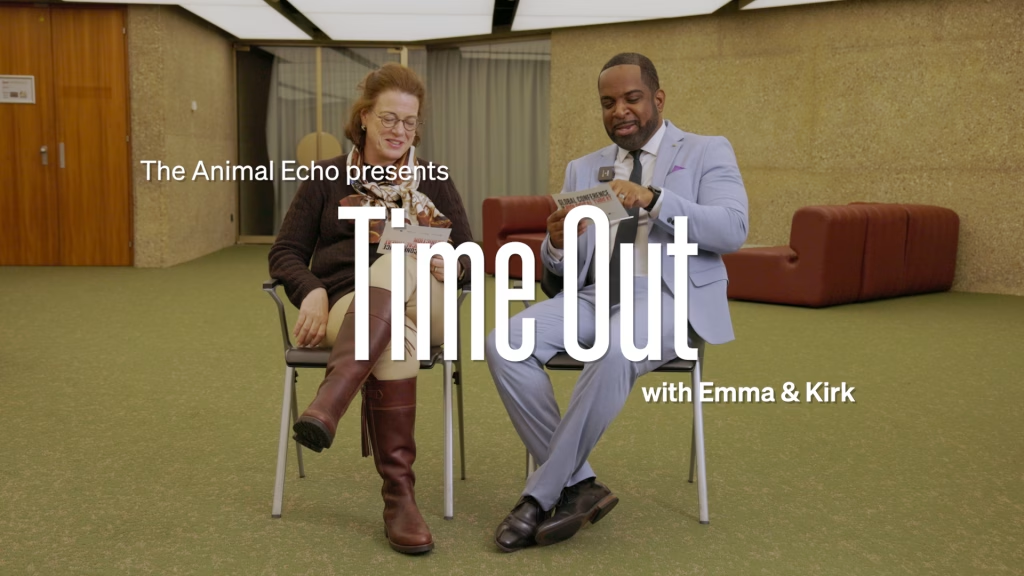
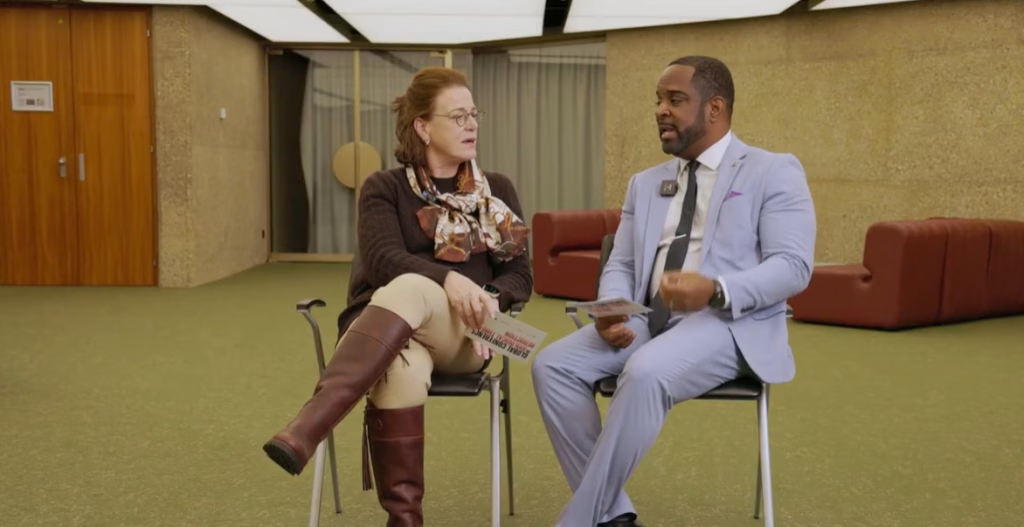
What motivates people to work in global health security? How do experts explain complex concepts like biosecurity to a curious 10-year-old?
Emma Ross and Dr. Kirk Douglas share the human stories, surprising moments, and reflections behind their work at the intersection of animal health and global health security.
- How would you explain what you do to a curious 10-year-old?
- When did it click that animal health was a global security issue?
- What still surprises you in your work?
How would you describe biosecurity to a curious 10-year-old?
For both Emma and Kirk, biosecurity is not just a concept; it’s something you do.
Kirk: Biosecurity is like “everyday risk management.” It’s like taking off your shoes before entering a home, a common practice in the Caribbean. It’s a small act, but one that helps prevent bringing germs into a safe space.
It’s about everyday habits: covering your mouth when you cough, being mindful of how diseases spread, and taking practical steps to reduce risk.
At its core, it is about protecting lives and livelihoods through simple, everyday actions.
In simple terms, biosecurity is everyday risk management.
Dr. Kirk Douglas
–Director, Centre for Biosecurity Studies at the University of the West Indies.
When did it click that animal health was a global security issue?
For many experts, the connection between animal health and global security isn’t obvious at first. In this conversation, Emma and Kirk reflect on the moment it became clear that what happens on a single farm can have ripple effects across the world.
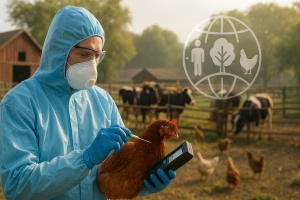
Emma: The connection became clear while reporting on the H5N1 bird flu outbreak as a medical correspondent. I was sent out to Thailand during bird flu. I go down during lunch break to get my favorite food, Thai street food — they eat a lot of chicken in Thailand. But chicken! It was right before they started banning chicken and culling the chickens, right? And suddenly I was nervous to eat the chicken even though I knew better. That connection and just covering that whole story and the devastation to that poultry industry and what it did and the impact it had, it really brought home for me the connection between animal health and global health security.
What still surprises you in your work?
For Kirk, the answer comes down to human behaviour. For Emma, it’s the moments when she feels ready to step away, something shifts: a breakthrough, a moment of cooperation, or a reminder that change is possible.
Kirk: It surprises me how people are capable of doing both “amazingly good” and “amazingly bad” things, often repeating the same patterns despite knowing better, but hoping for a different result.
It’s quite personal. For me, despite the challenges, the politics, the slow progress, and the frustrations of working in global health, I still find myself drawn to the work. Just when I’m about to walk away… something happens that reminds me we can make a difference.
Emma Ross
–Director, Global Health Programme at Chatham House, London.
Explore more
Receive the latest updates from our Organisation, network, and partners.
This includes Members’ self-declarations, news articles, scientific insights, publications, and more.